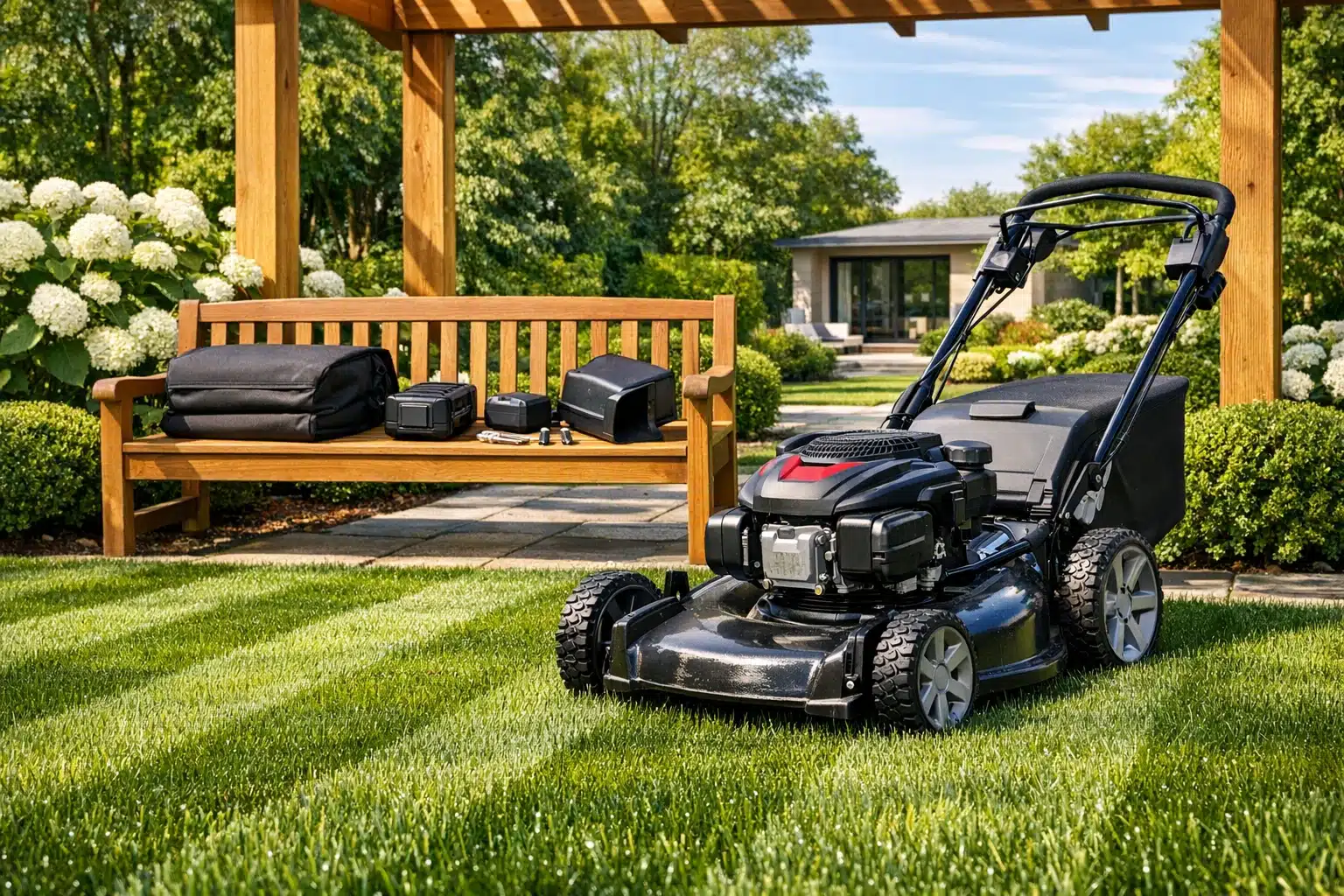
 Artificially generated image
 What to Know About Home Depot Scratch-and-Dent Lawn Mowers
Introduction and Article Outline
Scratch-and-dent lawn mowers at Home Depot occupy a useful middle ground: less expensive than untouched models, yet often far more predictable than buying a random used machine from a stranger. For homeowners trying to stretch a seasonal budget, that difference matters when grass starts growing faster than prices fall. This article breaks down how these deals typically work, which flaws are cosmetic, what risks deserve caution, and how to judge whether a discount truly earns its space in your shed.
Unlike small household gadgets, a lawn mower is a seasonal workhorse. It has moving parts, safety mechanisms, batteries or engines, wheels, cables, blades, and sometimes self-propel systems that need to function smoothly under load. A scrape on the deck may be little more than a visual annoyance, while a bent handle mount, cracked battery housing, or missing bagging component can affect performance, convenience, or long-term durability. That contrast is what makes scratch-and-dent inventory so interesting. The lower price grabs attention first, but the real question is whether the mower is discounted for a harmless imperfection or for a problem that will follow you home.
This guide is organized to help buyers move from curiosity to a practical decision.
- First, it explains what “scratch-and-dent” usually means in a Home Depot retail context.
- Next, it compares the savings with the trade-offs, including how these deals stack up against brand-new, used, and refurbished mowers.
- Then, it walks through a careful inspection process for both gas and battery-powered models.
- Finally, it closes with advice on who should consider one of these mowers and when walking away is the wiser move.
This topic is especially relevant for first-time homeowners, budget-conscious families, and anyone replacing an old mower in a hurry. Prices can rise quickly once you move beyond a basic push mower into self-propelled gas units, cordless models with larger batteries, or premium cutting systems. Scratch-and-dent inventory can soften that jump, but only if the buyer looks past the markdown tag and reads the machine itself. Think of it like standing at the edge of a yard after winter: from a distance, everything looks manageable, but the closer look tells you where the real work begins.
What “Scratch-and-Dent” Usually Means at Home Depot
The phrase “scratch-and-dent” sounds simple, but it can describe several different situations. In a retail environment like Home Depot, discounted lawn mowers may come from carton damage during shipping, customer returns, display use, minor assembly marks, discontinued inventory, or cosmetic blemishes noticed before sale. Some units are fully functional and simply missing the “fresh out of the box” appearance. Others may have been opened, partially assembled, or returned because a customer changed plans rather than because the mower failed. The challenge is that the same markdown label can cover very different stories, so buyers need to ask which story applies to the exact mower in front of them.
Cosmetic flaws are generally the least concerning category. These can include light scratches on the deck, scuffed wheels, a torn carton, chipped paint on the handle, or small marks from being moved across a sales floor. On a machine designed to cut grass, cosmetic wear alone is often not a serious problem. Structural or functional issues are a different matter. A cracked deck, damaged wheel bracket, bent blade spindle area, faulty height adjuster, missing charger, incomplete handle hardware, or signs of fuel leakage deserve much more scrutiny.
Another important detail is completeness. A mower may look fine at first glance yet be missing items that affect usability or value. Depending on the model, those missing pieces might include:
- a grass bag or mulching plug
- a battery or charger for cordless units
- owner documentation or setup hardware
- side-discharge attachments
- keyed safety components on battery platforms
Many shoppers assume that if a mower is sitting on a sales floor, everything needed must be there. That is not always the case. Open-box and returned merchandise can be especially inconsistent, so it is worth confirming every included part before checkout.
Warranty treatment can vary as well. Some discounted mowers may still carry standard manufacturer coverage, while others may be sold under terms shaped by condition, markdown status, or missing packaging. Policies can differ by product and store process, which makes it essential to verify return rights and warranty details at the time of purchase. In practical terms, the label “scratch-and-dent” tells you the price has changed; it does not tell you enough about why. That missing information is where smart buyers earn their savings.
How the Savings Compare with New, Used, and Refurbished Options
The appeal of a scratch-and-dent mower is obvious: lower upfront cost. But a good deal is not defined by the sticker alone. It is defined by total value, which includes condition, expected lifespan, warranty support, included accessories, and the odds that you will need repairs sooner than planned. In many retail markdown situations, cosmetic-only damage brings moderate discounts, while missing parts, discontinued status, or visible wear may push the price lower. The deeper the markdown, the more carefully you should inspect what is being traded away in return.
Compared with a brand-new mower, a scratch-and-dent unit usually gives up some combination of perfect appearance, sealed packaging, or absolute certainty about handling history. In exchange, the buyer may save enough to move up to a better model class. That can matter. A discounted self-propelled mower with a robust deck and stronger battery system may deliver a better real-world experience than a brand-new but bare-bones model at the same final price. This is where scratch-and-dent shopping becomes less about chasing the biggest percentage off and more about buying smarter capability for the money.
Compared with used mowers from private sellers, scratch-and-dent retail units often feel safer. There is usually a clearer retail paper trail, easier in-person inspection, and a store environment where questions about parts and return terms can be asked before purchase. A used mower from a neighborhood listing may be cheaper, but it can also come with unknown maintenance history, blade abuse, stale fuel issues, failing batteries, or a seller who disappears after the driveway test.
Refurbished mowers sit in yet another category. A true refurbishment suggests some level of inspection, repair, or restoration, which can be valuable if done well. However, not every buyer finds refurbished inventory as easily as in-store markdowns, and model selection may be limited.
- New: highest certainty, highest price, strongest “clean slate” appeal.
- Scratch-and-dent: potentially strong value if flaws are minor and all parts are present.
- Used: often cheapest, but carries the most uncertainty.
- Refurbished: can be a middle path if inspection and repair quality are trustworthy.
The best way to judge savings is to estimate what the mower would cost you after one full season, not just on the day you buy it. If the discount covers cosmetic flaws only, the deal may be compelling. If it merely offsets the cost of replacing missing accessories or solving hidden issues, the bargain may be thinner than it first appears.
What to Inspect Before You Buy a Scratch-and-Dent Mower
If there is one place where buyers should slow down, it is the inspection stage. A lawn mower is one of those tools that can seem perfectly fine in a quick glance, much the way a lawn can look even from the porch while hiding dips, roots, and soft spots underneath. A careful inspection does not need to be complicated, but it should be methodical. Start with the deck and frame. Look for cracks, deep dents, warping, severe scraping underneath, and signs the mower may have taken a hard impact. Surface marks are common; structural damage is not something you want to “discover later.”
Next, check the wheels and height adjustment system. Each wheel should sit squarely and roll smoothly without obvious wobble. Raise and lower the cut height through its settings. If the lever sticks, the wheels do not track evenly, or the deck sits crooked, the discount may not be worth the frustration. Then examine the handle assembly. Confirm it folds or locks correctly, all bolts are present, and cable routing looks intact rather than pinched or improvised.
Power systems deserve extra attention. For gas mowers, inspect for fuel or oil residue, damaged pull cords, loose air filter covers, and signs of rough treatment around the engine shroud. Ask whether the unit has been fueled or run before. For battery-powered mowers, verify the battery, charger, and any safety key are included if the model requires them. Inspect the battery casing for cracks, swelling, or damaged contacts. Missing battery accessories can erase a discount very quickly because replacement battery systems are often expensive.
Also check the cutting system. You do not need to perform maintenance in the aisle, but you should visually confirm that the blade area is not obviously bent, heavily rusted, or packed with residue suggesting unusual prior use. If the mower has bagging, mulching, or side-discharge functions, make sure the related parts are included and fit correctly.
- Deck and frame: no cracks, severe bends, or stress points
- Wheels: stable, aligned, and adjustable
- Handle and cables: secure, complete, and undamaged
- Engine or battery system: complete, clean, and free of obvious warning signs
- Accessories: grass bag, charger, battery, side chute, mulching plug, hardware
- Paperwork and policy: model details, return terms, warranty information
If store policy allows, ask whether the mower can be function-checked or whether an associate can confirm its status. Even a brief verification of completeness can save time later. A smart inspection does not remove all risk, but it turns guesswork into evidence, and that is the difference between an informed purchase and a hopeful one.
Conclusion: When a Home Depot Scratch-and-Dent Mower Makes Sense
For the right buyer, a Home Depot scratch-and-dent lawn mower can be a sensible way to lower costs without dropping all the way into the uncertainty of the secondhand market. It tends to make the most sense for homeowners who are comfortable inspecting tools, comparing missing components against replacement costs, and accepting a little cosmetic imperfection in exchange for a lower price. If your main goal is function over showroom freshness, this category can be surprisingly practical.
These deals are especially attractive in a few common situations. Maybe you need a mower quickly because the old one failed just as the growing season began. Maybe you want a better class of mower than your original budget allowed. Maybe you maintain a modest yard and care far more about reliable starts, clean cutting, and easy storage than about whether the deck has a small scrape hidden by the garage wall. In those cases, a carefully chosen markdown mower can feel less like settling and more like shopping with clear priorities.
Still, not every buyer should jump at the first discount tag. If you want maximum warranty certainty, zero setup questions, pristine packaging, and complete confidence that no one else has handled the machine, a brand-new mower is the easier path. If the scratch-and-dent unit has missing accessories, unclear return terms, or visible signs of misuse, the smartest move may simply be to leave it where it sits. A bargain that demands immediate spending on parts, batteries, or repairs is often just a delayed full-price purchase wearing a clearance sticker.
- Good fit: budget-focused shoppers, practical homeowners, buyers comfortable with inspection.
- Less ideal: shoppers who want perfect cosmetics, no uncertainty, or full out-of-box simplicity.
- Best rule: buy condition first, discount second.
For most readers, the takeaway is straightforward. Scratch-and-dent lawn mowers are worth considering when the damage is minor, the machine is complete, and the markdown meaningfully improves the value equation. Bring patience, ask direct questions, and inspect every working detail you can. When the numbers and the condition line up, the mower can earn its keep long before the first cut is finished.