7-Day Cruise from Savona to the Canary Islands
Leaving Savona and heading toward the Canary Islands feels like tracing a line from northern Italy’s compact Riviera to a chain of volcanic islands washed by the Atlantic. The route matters because it combines transport, holiday time, and cultural variety in one booking. For many travelers, that mix can be easier and sometimes better value than stitching together flights, hotels, and ferries. To make the idea less abstract, this article starts with a practical outline and then explores the route, ship life, costs, and traveler fit.
Outline of the article:
- Why this itinerary stands out among European cruises
- How a typical 7-day route may be structured
- What life on board is really like during longer sea stretches
- How to think about budget, cabins, and planning
- Who is most likely to enjoy this style of cruise
1. Why a 7-Day Cruise from Savona to the Canary Islands Is So Distinctive
A 7-day cruise from Savona to the Canary Islands is not just a standard seaside holiday with a few casual port stops. It is better understood as a transition voyage, one that carries passengers from the Mediterranean basin into the Atlantic sphere while changing the light, weather, and atmosphere day by day. That sense of movement gives the trip its character. You do not simply arrive somewhere warm; you watch the climate soften, the sea widen, and the landscapes become more volcanic and windswept as the week unfolds.
This matters because not every cruise offers the same rhythm. A classic Western Mediterranean itinerary often focuses on frequent port calls, short sailing distances, and fast-paced sightseeing. By contrast, a Savona-to-Canaries route typically includes more time at sea and fewer but more contrasting destinations. For some travelers, that is exactly the appeal. It allows room for rest, long breakfasts, deck walks, sunset viewing, reading, and the strange pleasure of seeing no land at all for hours. For others, especially those who want a new city every morning, it may feel too unhurried. Knowing this difference before booking is essential.
Geographically, the route is also compelling. Savona sits on the Ligurian coast, linked to the maritime culture of northwestern Italy. From there, a ship generally heads through the western Mediterranean, sometimes touching southern Spain, before passing the Strait of Gibraltar and entering the Atlantic. The final approach to the Canary Islands often feels like the payoff: darker rock, stronger light, broad promenades, and a climate that stays comparatively mild even when mainland Europe is cold. In winter, daytime temperatures in parts of the Canaries are often far gentler than those in northern Italy, which is one reason these voyages attract off-season travelers.
There is also a practical dimension. Cruising can simplify logistics because travelers unpack once while transport, accommodation, dining, and entertainment are bundled together. That convenience is especially attractive for people who do not want to coordinate multiple flights and hotel check-ins. Still, simplicity should not be confused with uniformity. Different ships and operators shape the experience in different ways, so it is worth checking:
- whether the trip is one-way or includes a broader loop
- which Canary ports are actually included
- how many sea days are scheduled
- what is covered in the fare and what is extra
In short, this itinerary stands out because it combines movement, contrast, and ease. It is part cruise, part slow geographic reveal, and that combination gives it a personality all its own.
2. Typical Route Structure and the Port Experience You Can Expect
When people imagine a cruise, they often picture a fixed day-by-day plan, but a 7-day sailing from Savona to the Canary Islands can vary in its exact port sequence. Weather, ship size, seasonal scheduling, and commercial routing all influence the final map. Even so, the voyage usually follows a recognizable structure: embarkation in Savona, one or more days of Mediterranean sailing, a possible stop in southern Spain or near the Strait of Gibraltar, then a longer Atlantic leg ending with one or several calls in the Canary Islands.
Embarkation day in Savona tends to be more important than first-time cruisers expect. Because the ship departs from Liguria, the opening mood is often relaxed rather than tropical. You may board with a jacket in hand, pass through a modern terminal area, and spend the afternoon learning the layout of the vessel while the Italian coastline slowly recedes. That first evening creates a clear mental break from everyday routines. The cruise has begun, but the destination still feels distant, which adds a pleasant sense of anticipation.
Many itineraries then include a transitional stop before the Atlantic crossing. A southern Spanish port can work as a cultural hinge between Italy and the islands. Cádiz, for example, offers an old maritime city with walkable streets and a strong historical identity. Málaga brings easy access to museums, urban beaches, and Andalusian energy. Some routes may use another Iberian call or pass straight onward depending on timing. The value of such a stop is not only sightseeing; it breaks up the sailing distance and changes the visual language of the trip from Riviera elegance to a more open, sun-baked Atlantic setting.
Once the ship reaches the Canary Islands, the contrasts become sharper. Although the islands belong to Spain, they do not feel interchangeable. That is important for planning expectations.
-
Santa Cruz de Tenerife often works well for travelers who want a balanced day: a manageable city, coastal views, and access to excursions toward Mount Teide or the historic streets of La Laguna.
-
Las Palmas de Gran Canaria tends to feel more metropolitan, with shopping, beaches, and the old quarter of Vegueta giving it a stronger urban identity than some visitors expect.
-
Arrecife on Lanzarote is often chosen by travelers drawn to lava fields, stark volcanic scenery, and the island’s signature mix of black rock and white architecture.
What makes these ports interesting is not only what you can do there, but how different they are from one another. Tenerife may appeal most to travelers who want mountain drama and varied excursions. Gran Canaria can feel more city-meets-seaside. Lanzarote often leaves the deepest impression on visitors who love unusual landscapes. If your itinerary includes only one Canary stop, research it carefully. If it includes two or three, the cruise becomes a compact sampler of the archipelago, and that can be a very efficient way to decide where you might someday want a longer land stay.
3. Life on Board: Sea Days, Comfort, and the Real Rhythm of the Voyage
The onboard experience is central to this itinerary because a Savona-to-Canaries cruise usually has more sea time than a city-heavy Mediterranean loop. That changes how you should think about the holiday. The ship is not merely transport between destinations; it becomes the main setting of the week. If you enjoy lingering over coffee, watching the horizon from a quiet deck, dipping into a spa, or taking your time through meals and shows, the extra sailing hours can feel luxurious. If you prefer constant off-ship activity, you may need to be more intentional about how you use those days.
Sea days have their own logic. Mornings often start slowly, with breakfast stretched longer than it would be at home. Public spaces fill in layers rather than all at once. Some passengers head for the gym or walking track, others settle into a lounge with a book, and many simply drift between pool areas, bars, and observation decks. The best ships for this type of route are usually the ones that handle unstructured time well. A large vessel may offer more restaurants, entertainment venues, and indoor spaces, which matters if the weather turns breezy. A smaller or quieter ship may suit travelers who want fewer distractions and a more intimate atmosphere.
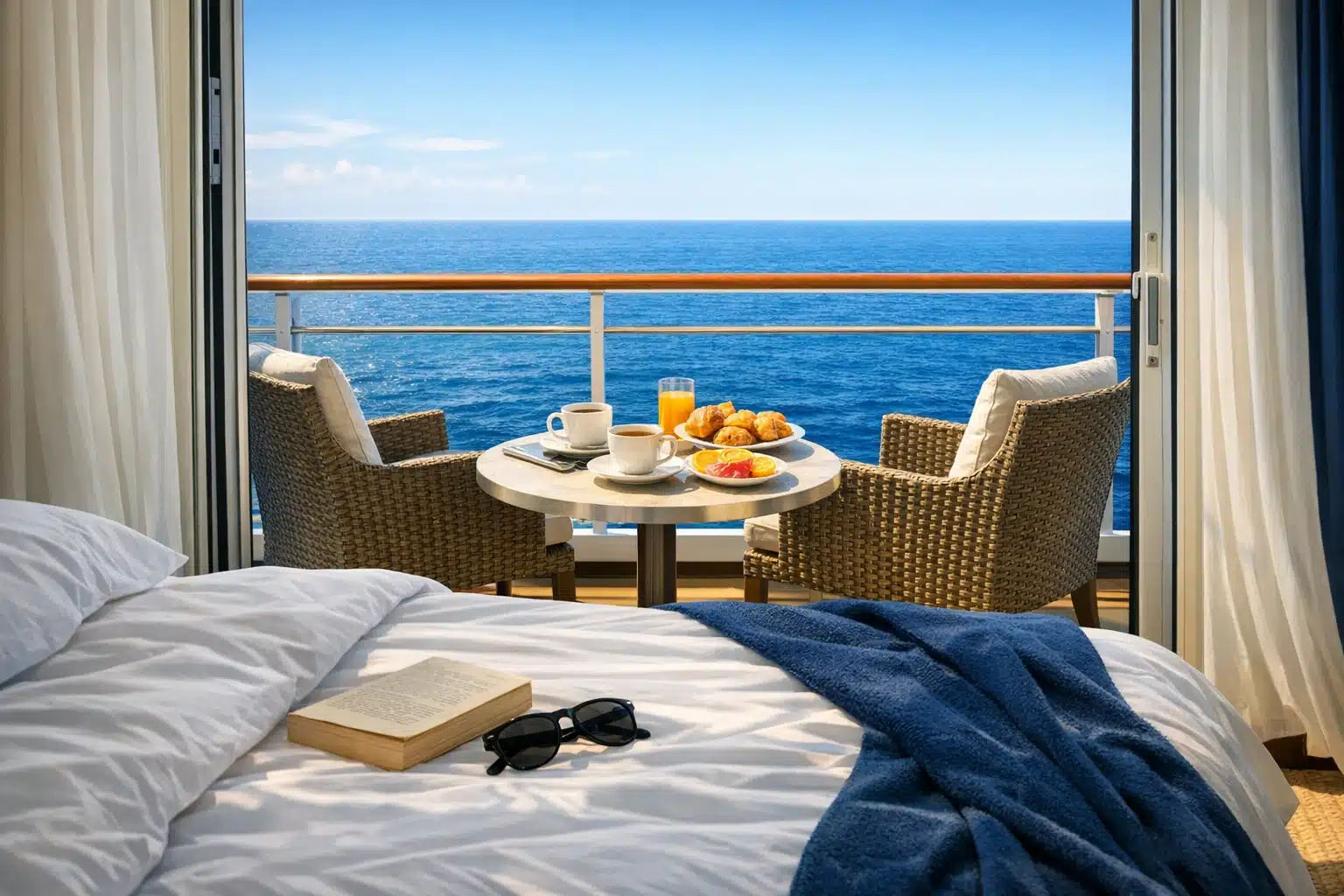
Cabin choice can make a meaningful difference on this particular route. Because there are longer stretches of open water, many passengers find that a balcony adds genuine value rather than functioning as a decorative upgrade. Watching the sea change color, especially during the move from the Mediterranean into the Atlantic, can become one of the week’s best memories. That said, an inside cabin can still be a rational choice for travelers who plan to spend most of the day around the ship and want to control costs. Midship cabins on lower or central decks are often preferred by passengers concerned about motion, as the Atlantic can feel livelier than more sheltered waters.
Practical preparation also matters. Pack for contrast rather than a single climate. Departure from Savona may feel cool, while the islands can invite lighter clothing, especially during sunny afternoons. A useful packing list often includes:
- a light jacket or layered outerwear for embarkation and windy decks
- comfortable walking shoes for ports with uneven streets or excursion stops
- swimwear and sun protection for warmer southern conditions
- one smarter outfit if your ship has formal or semi-formal evenings
- any medication you may need for motion sensitivity
Perhaps the most overlooked part of life on board is the mental shift. A route like this rewards travelers who can enjoy being between places. There is a certain elegance in that. One afternoon the ship glides past familiar European coasts; a few days later, it approaches volcanic islands under a different sky. The journey itself becomes the event, not just the background.
4. Budget, Booking Strategy, and How to Judge the Overall Value
One reason this cruise attracts attention is that it can look straightforward on paper: one fare, one cabin, one week, several destinations. In reality, the total cost depends on more than the headline price. To judge value properly, travelers need to look beyond the base fare and think about the full travel chain from home to Savona, from the final Canary port back home, and all onboard extras in between. That fuller view often changes the comparison.
The basic cruise fare usually covers the cabin, standard meals, and a broad range of onboard activities. That can make the trip seem attractive when compared with booking separate flights, hotels, taxis, and restaurant meals across several destinations. However, the extras can accumulate. Drinks packages, specialty dining, internet access, gratuities where applicable, spa treatments, and organized shore excursions are often priced separately. A cruise that looks inexpensive at first glance can become noticeably more expensive if passengers add multiple premium features without tracking them.
Return logistics are especially important on a route ending in the Canary Islands. If the sailing is one-way, the cruise fare is only part of the equation. You may need a flight from Tenerife, Gran Canaria, or another island, and airfares vary sharply depending on season, baggage, and airport choice. For some travelers, this still works well because the cruise replaces a separate journey south while providing a holiday along the way. For others, especially families managing several tickets, the return flight can reshape the budget significantly.
Cabin class is another major variable. The usual hierarchy applies, but the value proposition changes slightly on a route with substantial sea time:
-
Inside cabins are often best for budget-focused travelers who care more about destination access than private views.
-
Ocean-view cabins give natural light and can feel noticeably more spacious even when the square footage difference is modest.
-
Balcony cabins usually make the strongest case here because there is more time to use them during long sailing stretches.
When comparing this cruise with a land-based holiday, ask practical questions rather than emotional ones. How much would a week in the Canary Islands cost once flights, hotel, transfers, meals, and a few day trips are included? How much do you personally value waking up in a new setting without packing and moving? Are you happy to pay for convenience, or would you rather direct the same budget into a single island stay with more time ashore? There is no universal answer.
A sensible booking checklist includes:
- the final port and flight options back home
- whether port taxes and service charges are clearly shown
- cabin location and deck plan details
- cancellation terms and fare conditions
- the likely cost of the extras you actually care about
Seen in that light, value is not just about price. It is about fit. The best booking is the one that matches how you travel, not the one with the loudest discount label.
5. Best Time to Go, Who Will Enjoy It Most, and Final Thoughts
A cruise from Savona to the Canary Islands makes the most sense for travelers who like the idea of transition rather than instant arrival. That may sound abstract, but it has practical meaning. You are not flying directly into beach weather and starting a resort stay the same afternoon. Instead, you spend part of the week watching Europe loosen its grip and the Atlantic take over. For some people, that unfolding change is the whole charm of the trip. For others, it may feel like a delay before the “real” holiday begins. Knowing which kind of traveler you are will save you from booking the wrong experience.
Season matters too. The Canary Islands are especially attractive when much of continental Europe is cooler, darker, and less inviting for seaside travel. Autumn, winter, and early spring are often the periods when this route feels most relevant, because the islands can deliver milder daytime temperatures and more outdoor comfort than northern departure points. Savona may require layers and a brisk walk on embarkation day, while a few days later passengers can be sitting outdoors in brighter, softer conditions. That climatic contrast gives the voyage much of its narrative energy.
So who is likely to enjoy this itinerary most?
-
Couples who want a holiday that feels calm, scenic, and lightly romantic often find the sea days especially rewarding.
-
Retired travelers or flexible off-season travelers may appreciate the slower pace and the chance to travel south without constant airport handling.
-
First-time visitors to the Canaries can use the cruise as an introduction, sampling one or more islands before choosing a future stay.
-
Solo travelers who enjoy structured environments may value the built-in dining, entertainment, and ease of moving from place to place.
Who may want to think twice? Travelers who prioritize maximum time on beaches, hikers who want several full days on one island, and people who dislike sea days might get better value from flying directly to a single Canary destination. Families with very active children should also compare the ship’s facilities carefully, since long stretches onboard suit some families far better than others.
In conclusion, a 7-day cruise from Savona to the Canary Islands works best for travelers who see the voyage itself as part of the reward. It blends geography, comfort, and seasonal escape in a way few short European holidays can match. The route is not about racing through landmarks; it is about letting the landscape and the weather shift around you while your hotel quietly moves south. If that sounds appealing, this kind of cruise can be a smart and memorable choice, especially for readers who want a warmer destination without sacrificing the pleasure of the journey.