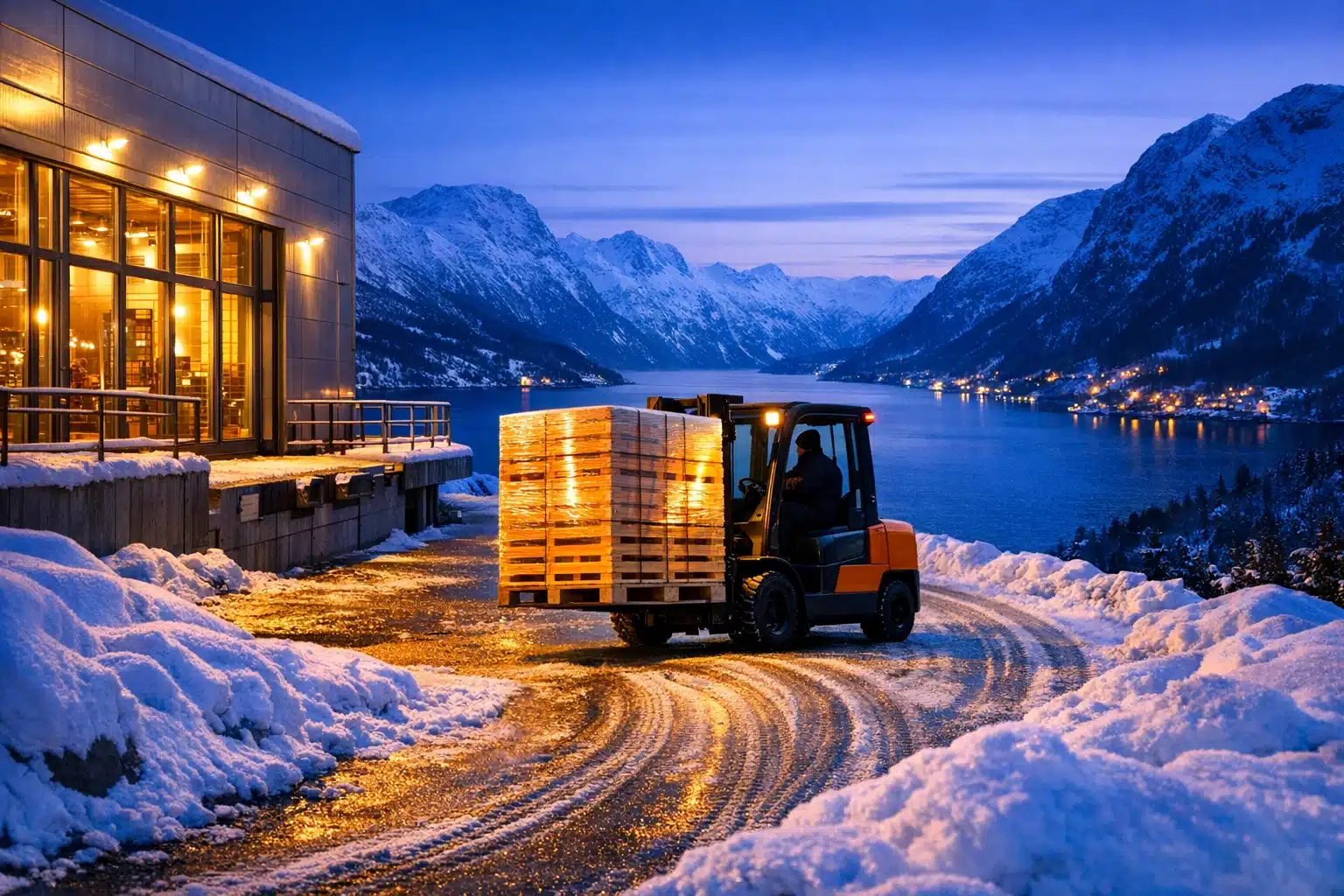
Exploring Forklift Operator Opportunities in Norway
Norway may be known for fjords, energy projects, and modern cities, but behind that polished image sits a busy logistics network that needs skilled forklift operators every day. From seaports and cold-storage warehouses to construction yards and retail distribution centers, these roles keep goods moving in a country where distance, weather, and efficiency all matter. For job seekers, that makes forklift work more than a basic entry role; it can be a practical route into stable employment and long-term growth.
Outline: 1) Why forklift operators are needed across Norway’s economy. 2) The training, certificates, and workplace habits employers typically expect. 3) A comparison of the industries where these jobs are most common. 4) Pay, shifts, conditions, and the realities of daily work. 5) How to search for openings, improve your profile, and decide whether this path suits your goals.
Why Forklift Operators Matter in Norway’s Economy
Forklift operators are easy to overlook when people talk about the labor market, yet they are central to how Norway functions on a day-to-day level. A forklift may not attract much attention, but in a warehouse, a port terminal, or a fish processing plant, it is as vital as a ferry crossing a fjord. Goods do not simply appear on supermarket shelves, building sites do not organize themselves, and export products do not load onto trucks by magic. Behind that flow sits a chain of handling, storage, movement, and timing, and forklift operators are placed right in the middle of it.
Norway’s geography makes this work especially relevant. The country stretches over long distances, combines urban centers with remote communities, and relies heavily on coordinated transport. Weather can also influence delivery schedules, storage planning, and loading routines. In practical terms, that means employers value workers who can move pallets safely and efficiently in environments where delays cost time and money. Demand can be seen across several sectors:
• retail and e-commerce distribution
• shipping and port logistics
• seafood processing and cold storage
• construction and material supply
• manufacturing and industrial warehousing
Some regions naturally offer more opportunities than others. The Oslo area is a major logistics hub, with large warehouses, wholesalers, and distribution centers. Bergen and Stavanger connect strongly to shipping, offshore support, and regional trade. Trondheim combines commerce, education, and industrial activity, while northern areas can see steady demand linked to seafood, storage, and transport. Seasonal fluctuations also matter. Retail warehouses may hire more during holiday peaks, while seafood and export-oriented businesses can need extra labor when production rises.
Another reason these roles remain relevant is that forklift operation often sits at the intersection of manual skill and process discipline. Employers do not merely want someone who can drive a machine forward and backward. They want an operator who understands load balance, shelf placement, scanning routines, damage prevention, and safety culture. In many workplaces, a forklift operator helps protect stock value, reduce accidents, and speed up turnaround times. That combination of physical action and operational responsibility gives the role more depth than outsiders sometimes assume.
For job seekers, this matters because demand is usually tied to the broader economy rather than a passing trend. Whenever goods are imported, stored, packed, frozen, moved, or exported, trained operators have a place in the system. Norway’s high focus on order, reliability, and safe work practices only increases the importance of that role.
Qualifications, Training, and What Employers Usually Expect
Getting forklift work in Norway usually involves more than simply saying you have driven one before. Employers tend to look for documented competence, a safety-first mindset, and a work style that fits structured environments. In many settings, formal forklift certification is expected, especially when the machine class and the job involve heavier loads, indoor rack systems, or mixed traffic with pedestrians. If you are entering the market from abroad, it is wise to check whether your existing training is recognized or whether local documentation will be required.
In practical terms, employers often value a combination of the following:
• forklift certificate or equivalent documented training
• previous warehouse, terminal, factory, or yard experience
• familiarity with scanners, stock systems, or digital picking tools
• basic understanding of health, safety, and environment rules
• ability to communicate clearly in Norwegian or English
• punctuality, accuracy, and calm behavior under pressure
Language can shape the job search. Norwegian is often preferred, especially where written safety instructions, team communication, or customer interaction are important. That said, English may be enough in some international warehouses, industrial sites, and staffing-agency roles, particularly when the team is multilingual. The key point is not perfect grammar; it is whether you can understand safety instructions, report issues, and coordinate with coworkers. In a busy loading zone, clear communication is not a bonus feature. It is part of doing the job properly.
Safety culture in Norway is typically strong. Employers may ask about incident awareness, lifting routines, PPE use, and how you handle narrow aisles or damaged pallets. A candidate who speaks confidently about checking equipment, respecting speed limits, and reporting hazards will often make a better impression than someone who focuses only on speed. Forklift roles can also involve tasks beyond driving, such as order picking, wrapping pallets, receiving deliveries, counting stock, or helping keep the warehouse organized. Flexibility matters.
For newcomers, experience is helpful but not always decisive. Some employers are open to training motivated applicants if they already hold the right certificate and show a reliable attitude. Staffing agencies can be one entry route, especially for seasonal or short-term roles, while direct applications may lead to more stable positions. Either way, the strongest candidates usually present themselves as safe, steady, and useful. In a Norwegian workplace, those qualities often speak louder than flashy claims. Competence is respected, but consistency is trusted.
Anyone considering this path should also understand the physical and mental side of the work. Depending on the site, the day may involve repeated turning, scanning, lifting, problem-solving, and concentration over many hours. Accuracy matters because one small mistake can damage expensive goods or create a hazard for the entire team. The role suits people who like practical routines, visible results, and the quiet satisfaction of making a complex operation run smoothly.
Comparing the Main Industries That Hire Forklift Operators
Not all forklift jobs in Norway feel the same, and that is important for applicants who want more than a generic job title. Two vacancies may both say “forklift operator,” yet the daily rhythm, physical environment, stress level, and career potential can differ a great deal. Understanding those differences helps job seekers aim for the setting that actually fits their strengths.
Warehouses and distribution centers are often the most accessible starting point. These roles can involve unloading trailers, moving pallets into racking, feeding packing stations, and preparing outbound shipments. The work is usually process-driven and measured by timing, accuracy, and stock control. If you enjoy routine, scanning systems, and predictable workflows, this setting can be a solid match. It is also one of the better places to build broad logistics experience.
Port and terminal work is different. Here the pace may be shaped by vessel arrivals, container schedules, and transport deadlines. The environment can feel larger, louder, and more exposed to weather. Safety is still central, but the atmosphere may be more industrial than in a retail warehouse. For some people, that is part of the appeal. The work can feel connected to the wider world, with cargo flowing in and out like a mechanical tide.
Construction-related forklift roles often involve moving materials such as timber, insulation, tools, or packaged components around active sites. This can mean uneven ground, changing layouts, and close cooperation with multiple trades. Compared with indoor warehouse work, construction may demand more adaptability and spatial awareness. The days are less uniform, and weather can shape the routine more directly.
Manufacturing plants offer another variation. In these settings, forklift operators may support production lines, move raw materials, handle finished goods, and work closely with quality and inventory teams. The environment may be cleaner and more controlled than construction or port work, but it can also be more rule-bound, especially where precise timing keeps production moving.
Seafood processing and cold-storage facilities are a distinct niche in Norway. These jobs can be physically demanding because of low temperatures, moisture, and strict hygiene routines. On the other hand, they may offer stable demand in regions tied to export industries. Candidates should think honestly about whether they prefer a dry warehouse floor or a colder, more specialized setting.
A useful comparison looks like this:
• Warehouses: structured, steady, good for broad logistics skills
• Ports: dynamic, industrial, often deadline-driven
• Construction: varied, outdoors at times, high need for adaptability
• Manufacturing: organized, process-linked, closely tied to production flow
• Cold storage and seafood: specialized, temperature-challenging, export-focused
Choosing wisely can improve job satisfaction. Some workers want routine and stability. Others prefer movement, noise, and an environment that changes by the hour. Norway offers all of these versions, and knowing the difference makes the search far more intelligent.
Pay, Shifts, Benefits, and the Everyday Reality of the Work
One of the biggest questions job seekers ask is simple: what is the work actually like once the contract begins? In Norway, forklift roles often come with conditions that reflect the country’s broader work culture, which tends to emphasize safety, structure, and a reasonable standard of employee protection. That does not mean every job is easy or ideal, but it does mean applicants should look beyond the headline wage and examine the whole package.
Pay can vary significantly depending on sector, location, shift pattern, contract type, experience, and the specific machine or environment involved. A standard warehouse role may pay differently from a freezer facility, a construction yard, or a night-shift terminal. Overtime, evening work, and weekend hours can raise earnings, while permanent roles may offer more stability than short agency assignments. In general, applicants should compare openings based on several factors:
• base hourly or monthly pay
• shift supplements for nights, evenings, or weekends
• overtime rules
• travel distance and transport costs
• pension arrangements and insurance coverage
• whether the role is temporary, seasonal, or permanent
Daily life can be both straightforward and demanding. On good days, the work has a rhythm to it: receive, scan, move, place, repeat. There is satisfaction in that pattern, especially for people who like visible progress. On harder days, the pressure may come from deadlines, stock discrepancies, damaged goods, tight loading windows, or sudden schedule changes. In winter, conditions outside can add another layer of difficulty. In freezer and cold-chain environments, the body feels the strain in a different way. The machine does the lifting, but the worker still carries the responsibility.
Norwegian workplaces often place strong emphasis on HSE practices, and this can be a real advantage for workers. Proper PPE, documented procedures, reporting routines, and attention to accident prevention are not just formalities. They shape how the day is organized. Job seekers who come from less structured environments may find this approach refreshing, though it can also feel strict at first. In reality, that structure is part of why many workers stay in the sector.
Applicants should also keep the cost of living in mind. A job offer that looks attractive on paper may feel different once rent, transport, and daily expenses are factored in, especially in or near larger cities. For that reason, it is smart to weigh income against region and lifestyle. A somewhat lower-paying role in an affordable area may offer a better overall balance than a higher-paying one in a costly city.
For the right person, the work brings a clear reward: steady tasks, a defined role, and the sense that your effort moves something real. Forklift jobs are not built on glamour. They are built on usefulness, and in a strong labor market, usefulness has value.
Finding Work and Deciding If This Path Fits You
Searching for forklift operator opportunities in Norway becomes easier when approached like a practical project instead of a hopeful gamble. The strongest candidates usually combine basic qualifications with a targeted job search, a clear CV, and realistic expectations. Large job boards, company career pages, logistics firms, manufacturers, wholesalers, port operators, and staffing agencies are all worth checking. A broad search can help, but a smart search is better. Looking specifically for warehouses, terminal work, food logistics, building supply chains, and industrial sites will often produce more relevant results than using only a generic job title.
Your CV should show more than machine operation. Employers often want evidence of reliability, safety awareness, and warehouse understanding. Useful points to highlight include:
• forklift certificate and machine types you are trained to use
• warehouse systems, scanners, or inventory tools you have used
• shift work experience
• loading, receiving, stock placement, or picking responsibilities
• safety reporting or HSE familiarity
• language ability in Norwegian and English
Applications also benefit from specificity. If you are applying to a cold-storage employer, mention experience in temperature-controlled settings. If the role is in construction supply, speak about outdoor materials handling and changing site conditions. Small details show that you understand the environment and are not sending the same application everywhere.
Networking matters more than many first-time applicants expect. A recommendation from a supervisor, colleague, or agency contact can help your profile rise above a crowded applicant pool. Temporary assignments can also lead to permanent work if you show up on time, follow procedures, and become the person managers trust when the shift gets busy. In logistics, reputation often travels faster than the forklift itself.
Longer-term growth is another reason this field deserves attention. A forklift role can lead into broader warehouse responsibility, team leadership, inventory control, dispatch coordination, transport planning, or specialized equipment work. Some workers stay because they enjoy the hands-on nature of the job. Others use it as a gateway into larger logistics careers. Both paths are valid.
For job seekers, the final question is not simply whether Norway has forklift openings. It is whether this kind of work fits your temperament and goals. If you like practical routines, visible results, physical movement, and workplaces where safety and order matter, it can be a strong choice. If you expect a passive job or dislike repetition and responsibility, the role may feel heavier than it looks from the outside.
In summary, Norway offers genuine opportunity for trained, dependable forklift operators, especially those willing to match their skills to the right industry and region. The best approach is calm and deliberate: secure the right documentation, understand the work environment, compare job types carefully, and apply with a profile that shows you can contribute from day one. For readers considering this path, that is the real takeaway: forklift work in Norway can be a stable and worthwhile option, but it rewards preparation far more than guesswork.