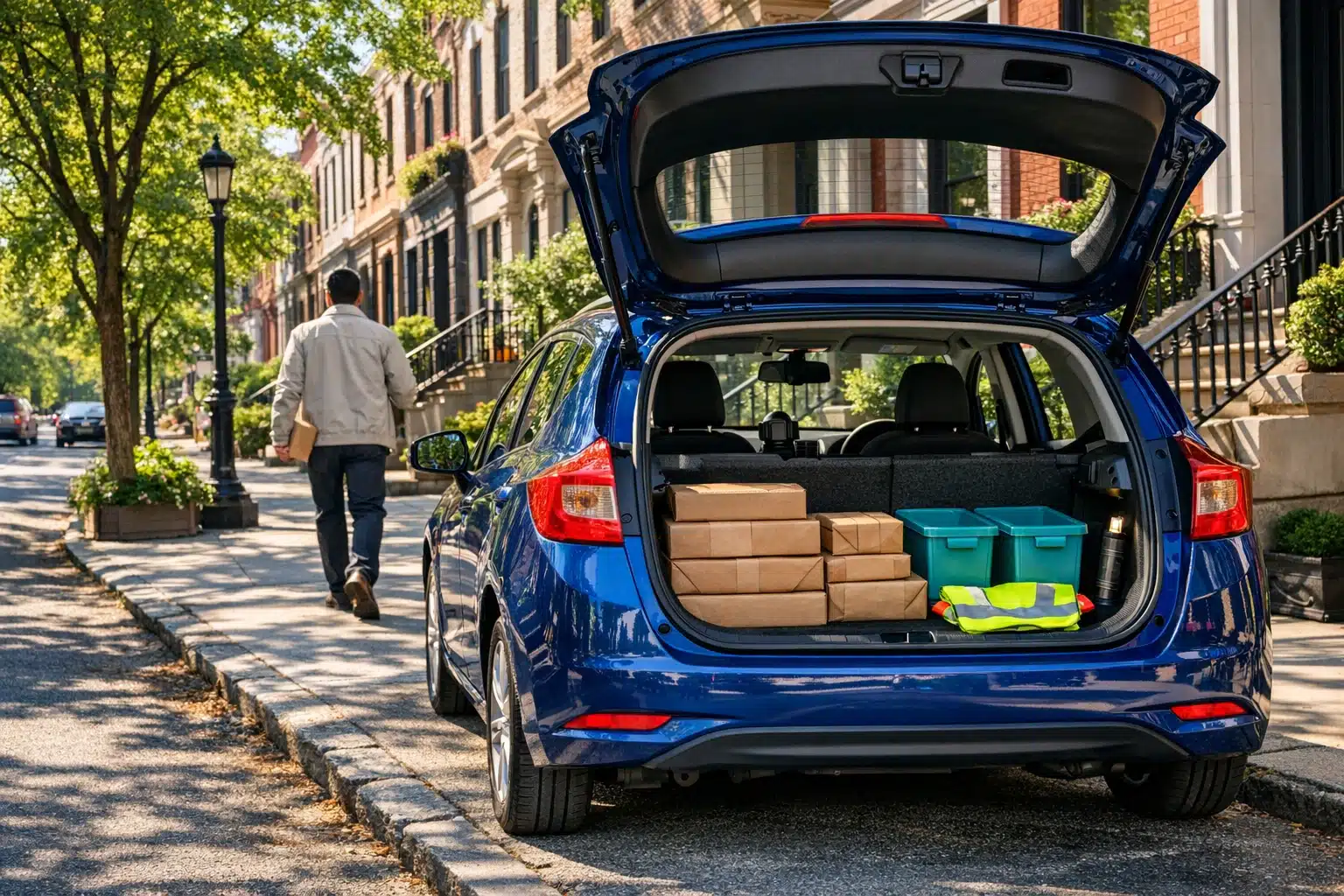
Temu Package Delivery With Your Own Car: A Practical Guide
Using your own car to deliver packages linked to big online marketplaces may sound like an easy side hustle, but the real picture includes route planning, wear on your vehicle, insurance questions, and tight delivery windows. This guide explains how Temu-related delivery usually works through third-party couriers rather than a simple in-house driver program. You will see what drivers need, how pay is shaped, and where the hidden costs appear. If you want to turn spare hours and trunk space into income, it pays to understand the system before the first box lands in your back seat.
Outline
– How Temu-related delivery with a personal car usually works in practice
– Vehicle, insurance, legal, and equipment requirements before you start
– Earnings, expenses, and the difference between gross pay and real profit
– Daily workflow, route strategy, and delivery habits that improve efficiency
– A practical conclusion for part-time drivers, gig workers, and car owners
How Temu Package Delivery With Your Own Car Usually Works
When people search for information about delivering Temu packages with their own car, they often imagine a direct sign-up page, a branded app, and a simple path from registration to route assignment. In reality, the process is usually less direct. Temu is primarily an e-commerce marketplace, and in many regions package movement is handled through third-party logistics companies, local courier networks, and established carriers. That means a driver may end up carrying Temu orders without technically working for Temu itself. This distinction matters because it shapes everything from pay structure to support, insurance requirements, and route volume.
Think of the supply chain as a relay race rather than a solo sprint. A seller ships the order into a broader logistics network, a sorting facility groups it by destination, and the final handoff may go to a company that needs local drivers using their own vehicles. In dense cities, a personal car can work well for small parcels because parking is easier than with a large van and the stops may sit close together. In spread-out suburbs, however, the same route can become a long loop of doorsteps, apartment gates, and driveways that quietly consume fuel and time.
There are several ways drivers may enter this kind of work:
– through a local courier company hiring independent contractors
– through seasonal overflow work when parcel volume spikes
– through route-based gig apps that connect drivers with short delivery blocks
– through subcontracting for a regional last-mile provider
This is also where package delivery differs from food delivery. With food apps, the order is prepared after a customer requests it, so drivers spend time waiting at restaurants and handling time-sensitive pickups. With parcel delivery, the packages are usually pre-sorted before the route begins. That can make the work feel more organized, but it also means drivers are judged on consistency, scanning accuracy, and route completion rather than on the quick handoff of a single meal. One trunk full of boxes can look manageable at sunrise and feel like a puzzle by midmorning if labels are disorganized.
Another important difference is customer interaction. Most package deliveries are low-contact, especially when a photo, scan, or drop confirmation is required. That suits drivers who prefer quiet work. Still, apartment access issues, incorrect addresses, gated communities, and signature requirements can slow the day. The practical lesson is simple: if you want to deliver Temu-related packages with your own car, focus less on brand assumptions and more on the actual delivery network, contract terms, and route expectations behind the work.
Vehicle, Insurance, and Setup Requirements Before You Accept Routes
Your own car is the engine of this opportunity, but it is also your largest business expense and your biggest source of risk. Before taking on parcel work, it helps to examine the vehicle not as a personal convenience but as a small commercial asset. A compact sedan may handle small packages well in urban areas, while a hatchback, wagon, or small SUV often makes loading easier and reduces the awkward shuffle of moving boxes from seat to trunk at every stop. Bigger is not always better. A large vehicle may carry more, but it also tends to consume more fuel and may be slower to park in tight neighborhoods.
Drivers should also think beyond cargo space. Reliability matters more than image. A car with excellent mileage, strong brakes, working air conditioning, and a healthy battery can outperform a flashier model that spends one afternoon every month at the repair shop. Parcel routes depend on predictability. If your car turns every workday into a mechanical cliffhanger, your earnings can disappear into maintenance bills faster than you can say “out for delivery.”
At a minimum, most drivers should review these essentials:
– valid driver’s license and vehicle registration
– up-to-date auto insurance, with a clear understanding of whether business use is covered
– a smartphone with dependable battery life and mobile data
– a car charger and phone mount for navigation
– basic organization supplies such as bins, markers, or tote bags
– a flashlight or headlamp for early morning or evening stops
Insurance deserves special attention. Many personal policies cover ordinary commuting and private errands, but not every policy automatically covers commercial or gig-based delivery activity. The exact rules vary by insurer and location, so drivers should ask directly rather than assume. That conversation may feel dull, but it is far less painful than discovering a coverage gap after an accident. Some companies require proof of insurance that meets contractor standards, and others may ask about vehicle age, condition, or inspection status.
Setup habits matter too. A clean car is not just about pride; it reduces misdeliveries. Packages should be grouped in the order you expect to use them, ideally by zone, street sequence, or route stop number. Drivers who toss every parcel into a loose pile often lose minutes at each address. Over an entire route, those minutes add up. A simple system might look like this: front seat for first stops, rear seat for mid-route orders, trunk for later deliveries or larger boxes. It is not glamorous, but neither is circling the same apartment block twice because one small parcel slid under a jacket.
Finally, remember the legal side beyond insurance. Parking rules, loading zones, apartment access policies, and proof-of-delivery standards can all affect your risk. Professionalism starts long before the first package scan. It begins with a vehicle that is suitable, properly covered, and ready to work without turning a modest side hustle into an expensive surprise.
Earnings, Expenses, and What Real Profit Looks Like
The number that attracts most new drivers is gross pay, but the number that should guide decisions is net profit. If a route promises a decent payout, it can sound appealing in isolation. Yet a personal-car delivery job only makes sense when the payment remains worthwhile after fuel, maintenance, tire wear, depreciation, taxes, and unpaid time are considered. That is the quiet math of the gig economy: the app or contractor may show revenue clearly, while the vehicle absorbs costs silently, mile after mile.
Temu-related package delivery may be paid in different ways depending on the company managing the route. Some drivers are paid per block, others per stop, and others through a hybrid system that includes completion bonuses, surge rates, or penalties for failed delivery attempts. A fixed block can be good when stops are dense and efficient. It becomes less attractive when the route stretches across distant neighborhoods, includes difficult apartment buildings, or requires repeated customer contact. Per-stop pay can reward fast organization, but it may also encourage drivers to underestimate the time lost at every locked gate, wrong code, or elevator ride.
To judge whether a route is worth taking, drivers should track at least five categories:
– total payout for the route or block
– total miles driven, including travel to the pickup point
– fuel consumed and average cost per mile
– vehicle wear, maintenance, and replacement savings
– self-employment tax or contractor tax obligations where applicable
A useful way to compare this work with other gig options is to think in terms of “earnings per fully loaded hour.” That means not just the hours spent making deliveries, but also the time spent driving to the hub, loading parcels, sorting them, waiting for access, and returning undelivered items if required. Food delivery may offer more flexibility because drivers can log on and off quickly, while parcel routes often require a fixed block of time. On the other hand, package work may reduce idle waiting and tip uncertainty because the route is preassigned. Some drivers prefer the structure; others prefer the stop-and-start freedom of restaurant orders.
There is also a seasonal dimension. High-volume shopping periods can create more opportunities, but busy seasons can bring harder workloads, longer routes, and more customer expectations. A route packed with small boxes may be profitable if the stops cluster tightly. The same payout becomes far less attractive if it includes long highway stretches or repeated apartment deliveries with no legal parking. This is why experienced drivers often track personal metrics rather than trust a headline rate.
If you are evaluating the opportunity, test it like a small business owner rather than a casual hobbyist. Keep a mileage log. Record fuel purchases. Set money aside for maintenance and taxes. Compare one week of package delivery against rideshare, food delivery, or other flexible work. Profit is not what appears in the app before you start. Profit is what remains after your car, your time, and the road all take their share.
Daily Workflow, Route Strategy, and Habits That Make Delivery Smoother
Successful package delivery with your own car is rarely about driving fast. It is about reducing friction. The most efficient drivers save time before the engine even starts by organizing packages, checking route order, and spotting problem addresses early. A rushed beginning often creates a messy middle, and a messy middle turns the final third of a route into a scavenger hunt on wheels.
A smart workflow usually begins at pickup. As parcels are loaded, drivers should verify labels, identify oversized items, and place the first deliveries within easy reach. If the route app provides stop numbers, sort around that sequence. If it does not, create your own system by neighborhood or street order. This is where a few minutes of planning can save half an hour later. The goal is simple: at each stop, open the door, grab the right package immediately, confirm the address, deliver, document, and move on.
Common habits that improve route performance include:
– checking navigation for traffic patterns before leaving the pickup point
– grouping apartment stops to handle access issues efficiently
– parking legally even when the shortcut looks tempting
– using package bins or labeled zones inside the car
– keeping a charger connected so the phone battery does not collapse mid-route
– documenting every delivery clearly with scans, photos, or notes when required
Apartment complexes deserve their own strategy because they often consume more time than detached homes. Entry codes may fail, customer instructions may be vague, and building maps may seem designed by someone who enjoys practical jokes. In those situations, calm procedure matters more than speed. Read the notes, call or message only when necessary, and follow contractor rules for failed access. A good driver protects completion rates without turning one difficult stop into ten wasted minutes.
Weather also changes the job. Rain increases loading and unloading time, dark evenings make address verification harder, and extreme heat can affect both driver concentration and device performance. Keeping water in the car, wearing comfortable shoes, and using weather-appropriate gear may sound basic, yet these details matter during longer blocks. Delivery work is physical in a quiet way. It is not just steering and tapping a screen; it is repeated entry, exit, lifting, walking, and attention.
Customer service still matters even when most deliveries are contactless. A parcel placed carelessly in plain view of the street, or a photo taken without showing the drop clearly, can create complaints that erase the efficiency gained elsewhere. The best approach is professional simplicity: confirm the address, place the item securely, follow the delivery instruction, and move on. Over time, this kind of steady routine is what separates drivers who finish routes with control from those who end every block frazzled, behind schedule, and wondering how so many small boxes created such a large headache.
Is It Worth It? A Practical Conclusion for Drivers Considering This Work
If you are considering Temu package delivery with your own car, the right answer depends less on the brand name and more on the structure of the opportunity in front of you. For some drivers, this kind of work can be a sensible way to use spare time, especially if they already own a reliable, fuel-efficient car and prefer predictable routes over passenger transport or restaurant pickups. For others, the combination of mileage, contractor uncertainty, insurance questions, and vehicle wear can make the job less attractive than it first appears.
The best candidates are usually people who enjoy independent work, can stay organized, and are comfortable treating their vehicle like a working asset rather than a casual errand machine. Students, parents with daytime availability, early retirees, and full-time workers seeking weekend income may all find value in parcel delivery if the route density and payouts are reasonable in their area. Drivers who dislike repetitive stops, apartment access problems, or strict documentation rules may prefer other forms of flexible work.
Before committing, ask practical questions:
– Who is actually hiring or contracting the driver for the route?
– Is the pay based on time, stops, blocks, or completion?
– Are there volume guarantees, or can a day’s work disappear suddenly?
– What happens with failed deliveries or returned packages?
– Does your insurance clearly allow this type of driving?
– After mileage and taxes, what is your realistic hourly profit?
This last question is the anchor. A delivery block that looks decent on paper may feel much smaller after fuel, maintenance, and time are measured honestly. That does not mean the work is bad; it means the work should be evaluated with clear eyes. In a strong local market with efficient routes, personal-car package delivery can be practical and steady. In a weak market with long distances and inconsistent assignments, it can become a slow leak from your wallet to your odometer.
For readers in the target audience, the takeaway is simple. Do your homework before you chase the first route. Verify who operates the delivery network, test one or two blocks, track every mile, and compare the result against your alternatives. If the numbers hold up and the routine fits your life, using your own car for Temu-related package delivery may become a useful side income stream. If the numbers do not hold up, walking away early is not failure. It is good business judgment, and in gig work, that is often the difference between feeling busy and actually earning well.